Things to Do in Tajikistan
Glacier-fed rivers, the Pamir Highway, and plov worth the altitude
Top Things to Do in Tajikistan
Find activities and tours you'll actually want to do. Book through our partners -- no booking fees.


Plan Your Trip
Essential guides for timing and budgeting
Climate Guide
Best times to visit based on weather and events
View guide →Day Trips
The best excursions and nearby destinations worth the journey
Explore day trips →Where to Stay
Best neighbourhoods, hotel picks, and booking tips
Find hotels →Travel Insurance
What's required, what coverage matters, and how to get a quote
Read guide →What to Pack
Climate-specific gear, essentials, and what to leave at home
See packing list →When Should You Visit Tajikistan?
Tap a month for weather, crowds, and highlights
View full year-round climate guide →Explore Tajikistan
Bartang Valley
City
Dushanbe
City
Fann Mountains
City
Garm Chashma Hot Springs
City
Iskanderkul Lake
City
Karakul Lake
City
Khorog
City
Khujand
City
Kulob
City
Murghab
City
Pamir Highway
City
Pamir Mountains
City
Penjikent
City
Seven Lakes Haft Kul
City
Wakhan Corridor
City
Yagnob Valley
City
Your Guide to Tajikistan
About Tajikistan
The air thins before you notice the mountains. Fly into Dushanbe and the first thing that hits you is the smell of woodsmoke and ripe apricots drifting down Rudaki Avenue, the capital's spine, where Soviet-era plane trees throw shade over fountains and old men in embroidered tubeteika caps play backgammon outside the teahouses.
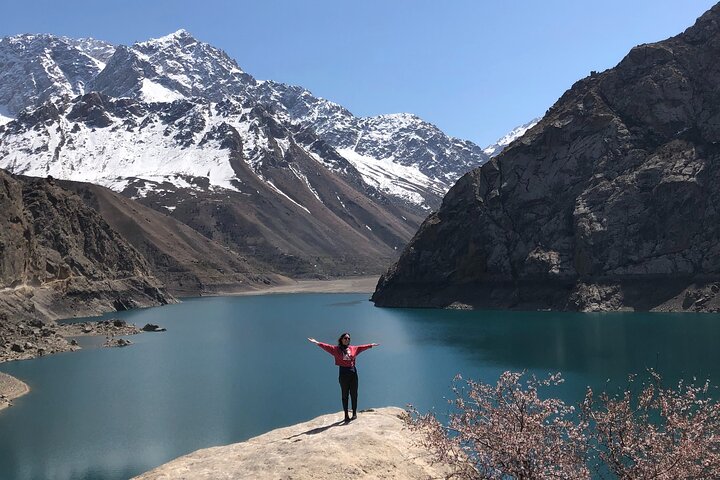
Dushanbe is small for a capital, walkable, slower than its neighbours. You can cross the centre on foot, past the gold-domed Ismaili Centre and the flagpole that once held a world record, in under an hour. Nobody comes to Tajikistan for the city. They come for what lies beyond it: the turquoise shock of Iskanderkul, a glacial lake in the Fann Mountains where the water is cold enough to make your teeth ache.
The Pamir Highway, the second-highest road on earth, climbing past 4,000 metres through the Wakhan Corridor with Afghanistan a river's width away. The crumbling mud walls of Hisor Fortress an hour west of the capital. A plate of plov, rice and carrot and fatty lamb slow-cooked in a cast-iron kazan, runs about 30 somoni ($2.80) at a Dushanbe canteen.
A shared marshrutka across town costs 4 somoni (40 cents). The trade-off is real: roads wash out, altitude sickness is no joke above Murghab, and you'll need a GBAO permit (around $20) just to enter the Pamirs. Come anyway. This is the least-visited corner of Central Asia, and the emptiness is the whole point.
Travel Tips
Transportation: There's no ride-hailing app or useful train network here; Tajikistan moves by shared taxi and marshrutka (minibus). Within Dushanbe, a marshrutka ride is a flat 4 somoni (about 40 cents); flag one down along Rudaki Avenue or wait at the marked stops. For longer hauls, shared taxis leave Dushanbe's depots when full rather than on a schedule, so arrive by 7am to claim a seat. The headline route is the Pamir Highway: a seat in a shared Land Cruiser from Dushanbe to Khorog runs roughly 350-450 somoni ($32-42) and takes around 14 hours on a good day. Insider trick: split a private 4x4 with three others and you control the stops at Iskanderkul and the Wakhan.
Money: Tajikistan runs on cash, and the cash is the somoni (TJS), currently around 11 to the US dollar. Bring crisp, unmarked dollars or euros to change. Torn or pre-2013 bills get refused at the exchange booths along Rudaki Avenue, which tend to give better rates than hotels. ATMs exist in Dushanbe and Khujand but are unreliable and nearly vanish once you head into the Pamirs, so withdraw everything you'll need before leaving the capital. Cards work at a handful of upscale Dushanbe hotels and almost nowhere else. Keep small notes handy: a 100-somoni bill is hard to break at a village shop, and drivers rarely carry change.
Cultural Respect: Tajikistan is majority Muslim but relaxed by regional standards; you'll see headscarves and short skirts on the same Dushanbe street. Modesty still travels well: cover shoulders and knees at the Hazrati Mavlono mosque or in any rural village, and slip off your shoes before stepping onto the raised tapchan platform where families eat. If you're invited for tea, and you will be, accept at least one cup, since refusing outright reads as cold. In the Pamirs, most people are Ismaili Muslims with their own customs and real pride in their Aga Khan-funded schools, so ask before photographing anyone, women. A few words of Tajik (rahmat for thank you) tends to crack open genuine warmth.
Food Safety: Come hungry hungry. Plov is the national dish. But seek out qurutob, torn flaky bread soaked in a tangy yogurt-and-onion sauce and eaten by hand from a shared platter, at a Dushanbe oshxona (canteen) for about 25 somoni ($2.30). Bazaar fruit is safe and superb. The apricots and melons piled up at Khujand's Panjshanbe market are worth the detour alone. Skip the tap water everywhere, Dushanbe included, and stick to bottled, sold for around 3 somoni (30 cents). Freshly baked non, the round tandoor bread, is always a safe bet. Buy it warm off the stack, and never set a loaf upside down, which locals consider bad luck.
When to Visit
Tajikistan runs on altitude, not coastline. Two zones rule the calendar. The lowlands around Dushanbe and Khujand stay mild. The high Pamirs punish late or early visitors. Spring (April-May) suits the lowlands best. Dushanbe hovers at 18-25°C (64-77°F). Orchards explode in bloom. Hills near Hisor turn emerald before summer scorches them.
Navruz on March 21 floods Rudaki Park with music, sumalak-ststirring, and buzkashi (wild goat-carcass polo) on the city fringe. Reserve a Dushanbe hotel weeks ahead. Rates increase 30-40% over the holiday. Summer (June-September) unlocks the Pamir Highway. Lowland Dushanbe roasts at 35-40°C (95-104°F). Khujand can hit 42°C (108°F).
Up at Murghab (3,650m) July days stay crisp at 15-20°C (59-68°F). Nights still flirt with freezing. This is peak season. A Khorog guesthouse costs about 200 somoni ($18) a night. Shoulder months drop to roughly 120 ($11). Shared-jeep seats vanish by mid-morning. Book Wakhan and Bartang valleys now or wait another year.
Autumn (October) is the quiet hero. Lowland temps slide back to low 20s°C (70s°F). Fann Mountains blaze gold. Hotel prices drop roughly 25%. High Pamir passes start icing over. Winter (November-March) slams the gates. The Pamir Highway turns into a dice roll of ice and blocked passes. Murghab crashes to -20°C (-4°F). Even Dushanbe turns cold, grey, and sodden under its heaviest rains.
This is the cheapest stretch. Flights into Dushanbe fall 30-40%. Fine if you only want the capital, Hisor Fortress, and steaming bowls of shurbo. The headline scenery stays locked behind snow. Most travelers should target June through September for the Pamirs. May or October works for the Fann Mountains and Iskanderkul minus heat or crowds.
Families and budget travelers win in September shoulder season. Prices soften yet roads remain open.
More Ways to Experience Tajikistan
Tours, day trips, and local experiences curated by on-the-ground operators.
Didn't see anything interesting yet?
Browse Viator's full catalog of tours, day trips, food experiences, and private guides in Tajikistan.
See All Tajikistan Tours on Viator